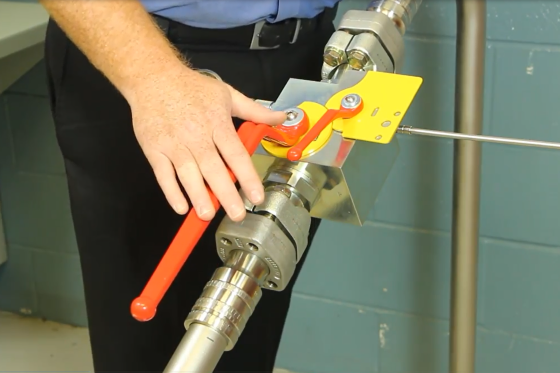
Table of contents
- What do ball valves from the SSBV series do in hydraulic systems?
- How does safe pressure relief with integrated venting work?
- Why does the mandatory operating sequence reduce operating errors?
- What role does lockout/tagout play in workplace safety?
- What technical features make the SSBV series special?
- Where are SSBV series ball valves typically used?
- FAQs
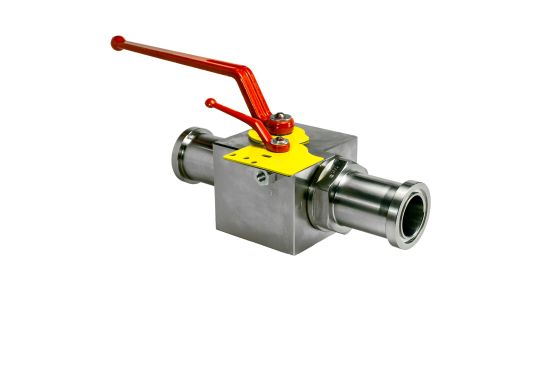
What do ball valves from the SSBV series do in hydraulic systems?
SSBV ball valves enable safe pressure relief in hydraulic systems prior to maintenance work by combining shut-off and venting in a single component, thereby reliably removing any residual energy from the system.
Trapped energy poses a significant risk, particularly in hydraulic systems. Even after the system has been switched off, pressure and fluids may remain in pipes or components and be released uncontrollably when opened. This is precisely where the System Service Bleed Valves (SSBV) come into play: they ensure that the relevant section of the system is depressurised in a targeted and controlled manner prior to servicing.
In doing so, they play a crucial role in making maintenance operations safer, more predictable and more efficient.
How does safe pressure relief with integrated venting work?
The core function of the SSBV series ball valves is based on the principle of an integrated bleed valve. This enables residual pressure in the system to be relieved in a targeted and controlled manner before a section of pipework is opened.
In hydraulic systems, residual pressure often remains after the system has been shut down and must be actively removed. Bleed valves provide a defined relief opening through which trapped fluids or gases can escape safely.
The SSBV variant combines this function directly with a shut-off valve. This means:
The flow is first interrupted
The isolated section is then vented in a controlled manner
This combination not only reduces the need for additional components but also minimises potential leak points and sources of error.
Why does the mandatory operating sequence reduce operating errors?
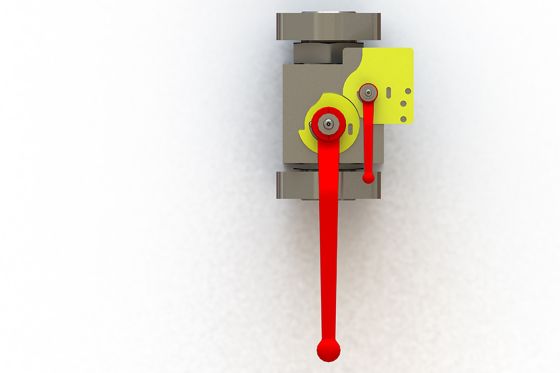
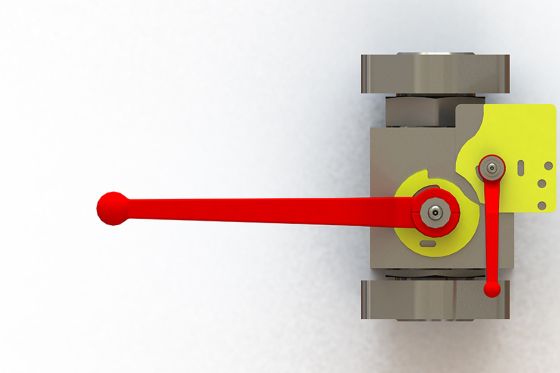
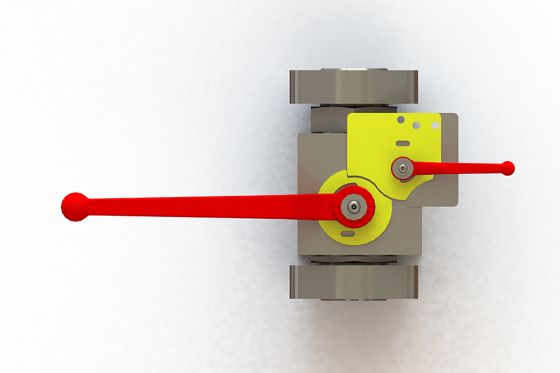
A key safety feature of the SSBV series is the design-determined operating sequence. It ensures that shutting off and venting cannot be carried out independently of one another or in the wrong order.
In practical terms, this means:
The valve mechanism forces the operator to first safely stop the flow of the medium and then relieve the system pressure. Incorrect operation – such as opening a pressurised pipe – is prevented by the design.
Particularly in complex systems or when under time pressure, this intuitive, fail-safe operating logic significantly reduces the risk of human error. Safety is thus not merely dependent on the operator’s qualifications, but is actively integrated into the design.
What role does lockout/tagout play in workplace safety?
The lockout/tagout function adds a crucial aspect to the safety concept of SSBV ball valves: mechanical protection against unintentional restarting.
Lockout/tagout procedures are used to reliably isolate hazardous energy sources during maintenance work. They prevent systems from being switched on uncontrollably or stored energy from being accidentally released.
In SSBV-type ball valves, this function is integrated directly into the valve:
Locking is only possible when the system is completely depressurised. This ensures that maintenance is carried out under safe conditions and that no residual energy remains.
The result:
Greater safety for maintenance staff
Clear visual indication of the safe state
Reduction in accidents caused by unexpected energy release
What technical features make the SSBV series special?
In addition to its safety features, the SSBV series impresses with its robust and practical design.
Key features include:
Compact block design for space-saving integration
In-line mounting for easy system integration
High-quality materials for high durability
Pressure resistance up to 420 bar
These features make the valves a reliable solution for demanding industrial applications where high system pressures and robust components are required.
Furthermore, the compact design reduces installation effort and enables clear and straightforward integration into existing systems.
Where are SSBV series ball valves typically used?
SSBV series ball valves are used in particular in safety-critical applications where an uncontrolled release of pressure or media can have serious consequences.
Typical areas of application include:
Steelworks
Heavy industry
Systems with high system pressures
Applications with heightened safety requirements
In such environments, faulty shut-off or inadequate pressure relief can lead to significant risks to people, machinery and the environment. The SSBV series specifically counteracts these risks and ensures that maintenance work can be carried out in a controlled and safe manner.
Customer- and Special Application Valves from STAUFF
SSBV are just one of numerous customer- and application-specific special variants that are not featured in the catalogue. These also include
- Highest-Pressure Ball Valves
- High-Temperature Ball Valves
- Ball Valves for Gas Applications
- Ball Valves for Paints and Lacquers
- Ball Valves for Isocyanates
- Ball Valves with Fire-Safe Approval
If you have any questions or requirements, please do not hesitate to contact us!
FAQs
What is a System Service Bleed Valve?
A system service bleed valve is a valve that combines shut-off and pressure relief functions. It enables a section of a hydraulic system to be safely isolated and simultaneously vented prior to maintenance work.
Why does a Hydraulic System need to be depressurised before maintenance work?
Residual pressure may remain in hydraulic systems even after they have been switched off. This pressure can be released uncontrollably when lines are opened, posing a significant safety risk.
How does the integrated bleed function work on SSBV ball valves?
Once the medium has been shut off, the remaining pressure is safely relieved via the integrated bleed function. This ensures that the isolated section of the system is safely depressurised.
What does ‘forced operating sequence’ mean in the context of a valve?
The operation is mechanically controlled in such a way that certain steps can only be carried out in the correct sequence. This reduces operating errors and the resulting risks.
What does ‘lockout/tagout’ mean in relation to hydraulic valves?
Lockout/tagout refers to a procedure for securing plant during maintenance work. Valves or switches are locked and tagged to prevent accidental activation.
For which pressure ranges are SSBV ball valves suitable?
The SSBV series is designed for applications with high operating pressures and offers Pressure Resistance of up to 420 bar.
In which industries are SSBV valves used?
They are primarily used in sectors with high safety requirements, such as the steel industry, plant engineering and other areas of heavy industry.

Newsletter Sign-up
Sign up now and never miss another post!