IP protection classes in hydraulics: importance, advantages and STAUFF practical examples

Why IP protection classes are crucial for reliable and durable hydraulic systems

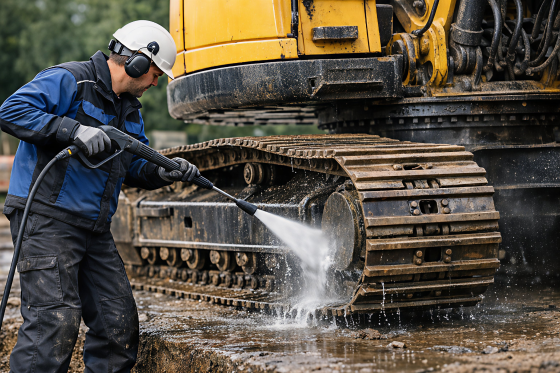
Construction machine being cleaned with a high-pressure cleaner
Productos
03/10/2026
STAUFF Team
Tiempo estimado de lectura: 5 minuto/s

IP protection classes in hydraulics: importance, advantages and STAUFF practical examples

Why IP protection classes are crucial for reliable and durable hydraulic systems

Construction machine being cleaned with a high-pressure cleaner
Productos
03/10/2026
STAUFF Team
Tiempo estimado de lectura: 5 minuto/s

What IP protection classes are - and why they are essential for hydraulics

IP protection classes describe the degree of protection of a device against the ingress of dust and water. Another key point is protection against contact and personal injury from electrical voltage. They are particularly important in hydraulics, as components - from sensors and level indicators to measuring devices - are often used in environments with moisture, dirt, mud, oil mist or regular cleaning. A suitable IP protection class guarantees functional safety, health protection extends the service life and ensures reliable machine availability. The abbreviation IP stands for International Protection.

Structure and meaning of the IP code

The IP code (IEC 60529) consists of two codes:

  • First digit: Protection against the ingress of foreign bodies (0-6)

  • Second digit: Protection against the ingress of water (0-9K)

Example: IP67

  • "6" = completely dustproof

  • "7" = Protection against temporary immersion in water

This makes it easy to recognise whether a component is suitable for water jets, moisture, submersion or high-pressure cleaning.

The most important IP protection classes: Overview table

This table shows the IP protection classes relevant to the industry - regardless of whether STAUFF uses them. They describe the protection levels that typically play a role in industry, mechanical engineering, electronics, automotive and hydraulics.


IP protection class

Protection against foreign bodies

Protection against water

Typical areas of application

IP20

Finger protection

No water protection

Switch cabinets, electronic housings

IP40

Protection from wires/tools

No water protection

Indoors, dry industrial environments

IP44

Limited protection against foreign bodies

Splash water

Building technology, machines, installations

IP54

Dust protected

Splashproof

Industrial plants, workshops

IP55

Dust protected

Jet water

Machines and aggregates

IP65

Dustproof

Jet water

Hydraulics, mobile machines, industry

IP66

Dustproof

Strong water jets

Outdoor areas, mobile systems

IP67

Dustproof

Submersion (temporary)

Hydraulic tanks, sensors, mobile machines

IP68

Dustproof

Submersion (permanent)

Offshore, tank interiors, sensor technology

IP69K

Dustproof

High-pressure/steam jet cleaning

Food, commercial vehicles, construction/agricultural machinery

Why IP protection classes are so important in hydraulics

Hydraulic systems are typically exposed:

  • Dust, abrasion, dirt and mud

  • Oil mist, moisture, rain and condensation

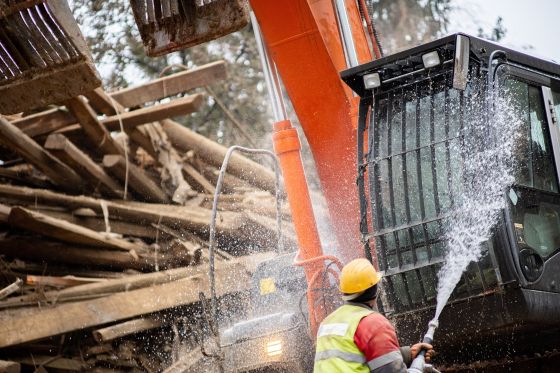
  • Cleaning with water jets or high pressure

  • Mechanical loads and vibrations

A suitable protection class minimises the risks of:

  • Sensor failures

  • Moisture in electrical contacts

  • Corrosion and short circuits

  • unplanned downtimes

STAUFF therefore deliberately specifies IP protection classes in an application-orientated manner in order to guarantee reliability and operational safety.

Practical example: STAUFF level indicator SNKK (IP69K)

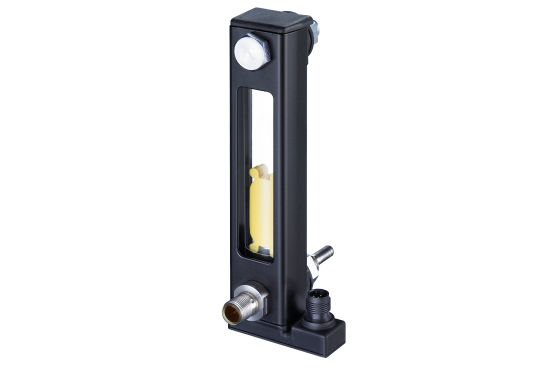
The optical-electrical level indicator SNKK combines a compact design with a high protection class - ideal for mobile or harsh hydraulic environments.

Technical advantages

  • Standard: IP69K - suitable for high-pressure/steam jet cleaning

  • This standard means more precisely: Even if water hits the housing from any direction with greatly increased pressure, this must not have any damaging effect.

  • 40 mm more compact than the standard SNK series

  • Electrical SPDT switching function

  • Developed for demanding environments and simple electrical connection despite installation close to the floor

  • The SPDT switching function makes it possible, for example, to switch from a red to a green signal light to inform the operator of the fill level from a distance.

Practical benefits

  • Ideal for construction, forestry and agricultural machinery, stationary hydraulic tanks

  • High resistance to dirt, moisture and vibration

  • Can be cleaned with a high-pressure cleaner (IP69K)

  • Market comparison: Comparable level indicators are not only significantly larger, but are also only available up to IP65

Other STAUFF products with IP protection classes

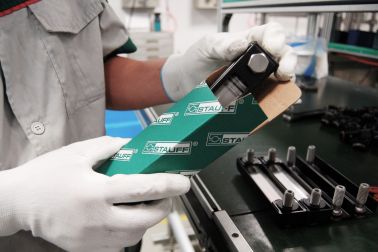
Optical level indicator is packaged
Level and temperature monitoring
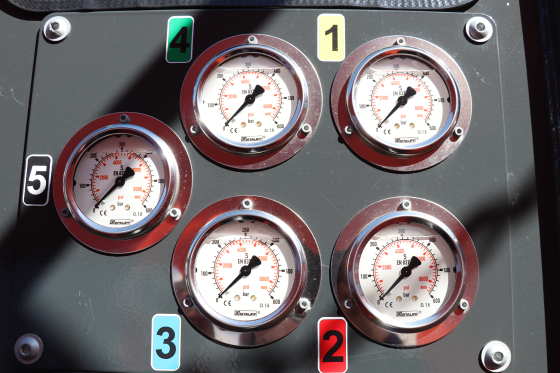
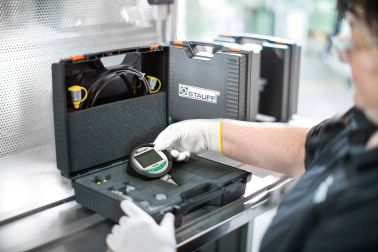
Digital pressure gauge is packaged
Mechanical and digital pressure measurement
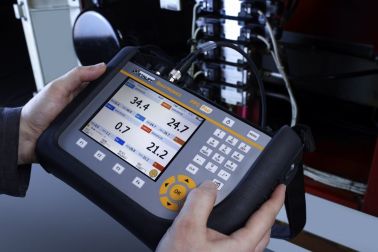
Mobile diagnostic device in use
Mobile measuring and diagnostic devices
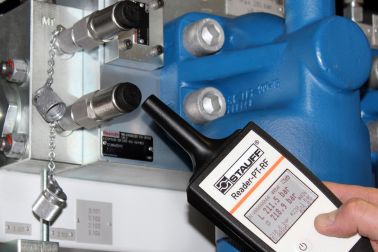
Wireless Pressure Transmitter during a measurement
Wireless pressure measurement
Optical level indicator is packaged

Level and temperature monitoring

Digital pressure gauge is packaged

Mechanical and digital pressure measurement

Mobile diagnostic device in use

Mobile measuring and diagnostic devices

Wireless Pressure Transmitter during a measurement

Wireless pressure measurement

Optical level indicator is packaged
Level and temperature monitoring
Digital pressure gauge is packaged
Mechanical and digital pressure measurement
Mobile diagnostic device in use
Mobile measuring and diagnostic devices
Wireless Pressure Transmitter during a measurement
Wireless pressure measurement
Level and temperature monitoring

STAUFF SNA - Optical level indicators

IP65
For standard applications on hydraulic tanks, protected against dust and water jets.

STAUFF SNK - Optical-electrical level indicators

IP65, optional IP67
For applications with electrical switching signal in environments with moisture.

STAUFF TS-SNA/SNK-PT100 - Temperature sensors

IP68
Suitable for permanently damp or submerged areas.

How to choose the right IP protection class

The selection depends on the application environment:

  • Indoors, low humidity → IP54

  • Outdoor area, water jets → IP65

  • Mobile machines, temporary submersion → IP67

  • High-pressure/vapour jet cleaning → IP69K

  • Unprotected outdoor area -> IP45

Essential criteria are: Moisture, soiling, cleaning pressure, installation position and mechanical load.

FAQs

What are IP protection classes and why are they important in hydraulics?

What is the difference between IP65 and IP67?

When do you need IP69K?

Which IP protection class is ideal for hydraulic tanks?

Are IP67 or IP69K waterproof?

Which STAUFF products have high IP protection classes?

What is the most common IP protection class in hydraulics?

How do I find the right IP protection class?

Newsletter Subscription

Newsletter subscription

Subscribe now and don't miss any new articles!

Palabras clave y etiquetas
Measurement technology Education Durability
Filtro
Categorías
Archivo
Filtro
Categorías
Archivo
STAUFF Team
Our in-house editorial team
STAUFF Team
EditMenuCloseResetCheckSpinnerFiltersCart